Toronto winters can be unpredictable. One week may bring mild temperatures, and the next may hit with freezing winds, snowstorms, or sudden drops well below zero. These weather swings can put real stress on your home’s HVAC system. Even with proper maintenance, your furnace or heat pump can experience freeze-related damage that affects comfort, efficiency, and reliability.
Understanding how snow, ice, and freezing conditions impact your heating system can help you spot problems early and take action before a minor issue becomes a major repair.
Frozen Coils: A Common Winter Breakdown
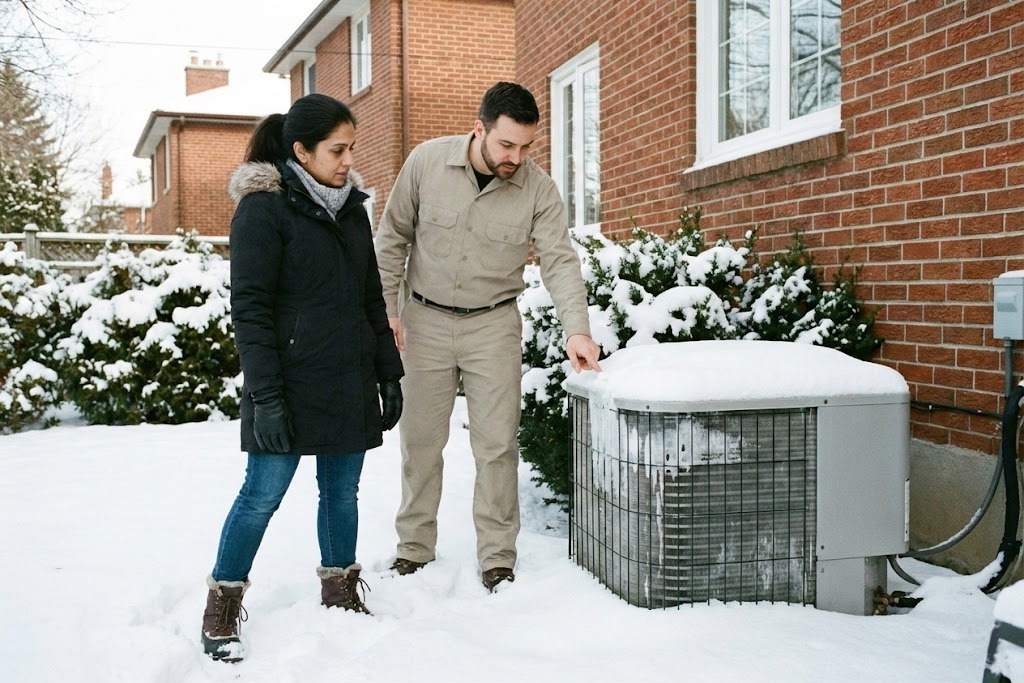
Frozen coils are one of the most frequent HVAC issues during cold snaps. When snow or ice builds up around your outdoor unit—or moisture freezes on the coil itself—airflow becomes restricted. Without proper airflow, your system struggles to move heat effectively, and it may shut down to protect itself.
Signs of frozen coils include:
- Weak or no heat
- The system running constantly
- Ice buildup on the outdoor unit
- Warm air outside but cold air inside
If your system enters “emergency heat” mode or begins short-cycling during freezing weather, it may be trying to compensate for frozen coils.
Cracked Drain Pans from Freeze: Thaw Cycles
As ice and snow melt off your heating system, water collects in the drain pan. But when temperatures dip below freezing again, that water turns to ice. Because ice expands, it can crack or split the drain pan.
A cracked drain pan can cause:
- Water leaks
- Ice buildup under the unit
- Rust or corrosion
- Damage to electrical components
Homeowners don’t always notice a cracked pan until there’s visible dripping or moisture around the equipment. Addressing the issue early helps avoid more extensive repairs.
Burst or Blocked Condensate Lines
Condensate drain lines carry water produced by your HVAC system safely outside. During freeze events, that water can freeze inside the line, forming a blockage. In more severe cases, the expanding ice can crack the line entirely.
When that happens, you may notice:
- Water leaks
- The system shutting down unexpectedly
- Ice where the line exits the home
- Higher indoor humidity
A burst condensate line can quickly cause water damage, so it’s important to have it inspected and repaired right away.
Snow and Ice Accumulation Around Outdoor Units
Snow piles, drifting snow, or ice buildup can block airflow to your heat pump or outdoor furnace components. When airflow is restricted, the system has to work much harder, increasing wear and reducing efficiency.
If the outdoor unit is buried in snow or surrounded by ice, you may notice:
- Reduced heating performance
- Longer heat cycles
- Strange noises as the fan hits ice
- Frost forming rapidly around the unit
Keeping at least a 2–3 foot clearance around the outdoor unit helps it operate properly during winter storms.
Preventing Winter HVAC Damage
Many freeze-related issues can be prevented with simple steps like:
- Clearing snow away from the outdoor unit
- Ensuring proper drainage
- Insulating exposed pipes
- Scheduling a winter tune-up
- Responding quickly to unusual noises, leaks, or reduced heat
Professional maintenance before and during winter is the best way to reduce the risk of surprise breakdowns during extreme weather.
Keep Your Home Warm and Protected This Winter
Toronto’s winter weather can be tough on home heating systems, but early detection and fast repairs can prevent long-term damage. Whether you’re dealing with frozen coils, cracked pans, blocked drain lines, or snow-related issues, getting help quickly ensures your home stays warm and safe.
For reliable winter HVAC service, inspections, and repairs, turn to Advantage Airtech Commercial Ltd.
Contact Advantage Airtech Commercial Ltd. today to schedule your winter HVAC service.