The term radiant heating tends to mean something different in the commercial and industrial sector than it does in the residential. When you hear residential HVAC technicians talk about adding radiant heating to a house, they’re usually referring to heating using a boiler, a.k.a. hydronic heating. In hydronic heating, a boiler heats up water and sends it to terminal points such as radiators and baseboard heaters to raise their temperature, which then sends waves of heat into rooms. Other types of radiant heating in homes include electrical elements in the floor or walls that heat up building material and radiate heat indoors.
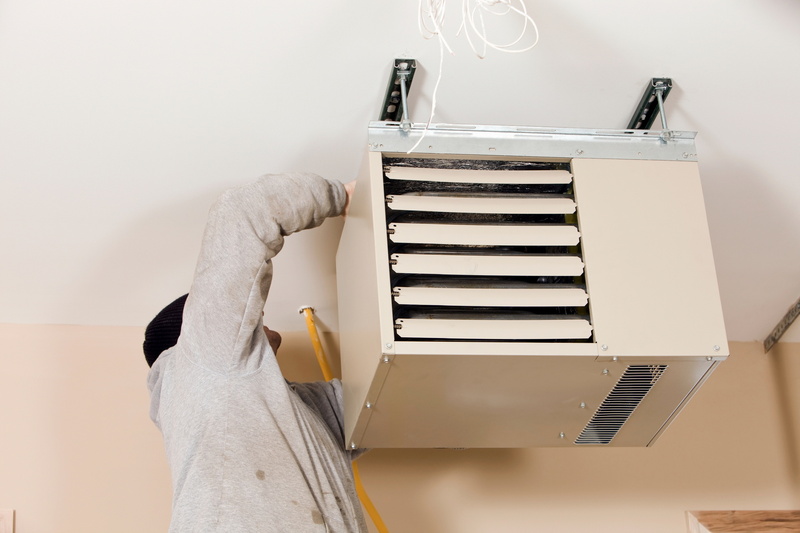
These methods are used in commercial buildings, but when technicians talk about using a radiant heating system for a commercial or industrial space, they usually mean radiant tube heating. The heat from these is still radiant, i.e. it doesn’t heat the air but instead sends infrared waves to heat the people and objects within that space. However, radiant heaters work much differently than hydronic systems, and they have a special use: they’re excellent at heating large, open spaces such as warehouses or spaces that are often exposed to the outside cold.
 If you’re currently looking to install commercial or industrial HVAC equipment for your facility, you’ll immediately encounter the question of how powerful the equipment needs to be and how many units you’ll need to have installed to meet the climate requirements of the facility. In the HVAC industry, the job of determining the heating/cooling output requirements for new installations is called
 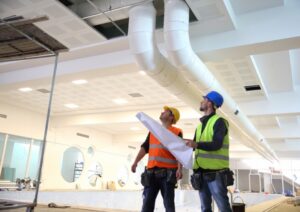 Commercial HVAC is a complex field that requires years of training and experience. Most business owners and commercial facility managers don’t have specialized knowledge of this field, and that’s the reason they rely on contractors like us for their commercial air conditioning and
 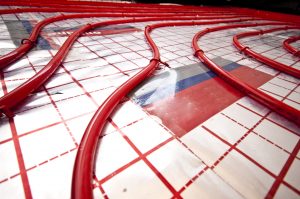 Your commercial facility may already use hydronic heating in some capacity, possibly because it is necessary for process. If you are currently doing remodeling, renovations, or new construction for your facility and are considering your options for
 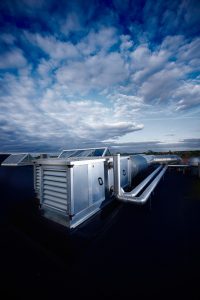 When it comes to
 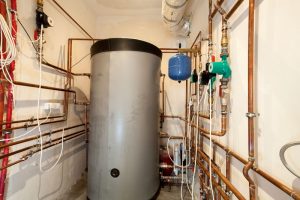 A commercial facility requires specialized heating and cooling system configurations and layouts. There are several options, such as a water-source heat pump or packaged rooftop units with variable-air-volume (VAV) boxes to modulate heating and cooling needs. The different configurations have benefits and drawbacks, and it’s always best to leave the decision-making for the ideal HVAC system for your facility to seasoned professionals.
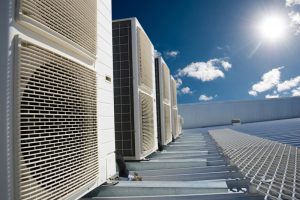
 The standard way of providing climate control inside most commercial facilities is with the air-source heat pump. You’re most likely familiar with these as the rooftop units found on commercial buildings. They work through refrigeration circulation to move heat either into or out of a facility space. The reason they’re called “air-source” heat pumps is because the use the air both indoors and outdoors for heat transfer.