 We handle commercial HVAC service in Toronto, ON for a wide variety of facilities and businesses. We know the value of climate control inside a building to help with process and protect equipment—whether it’s installing heating units for a large warehouse or maintaining chillers to cool down vital equipment.
But what we want to address here is a part of climate control that often gets overlooked, and that’s employee wellness. For most facilities, employee productivity and health are as important as process and equipment, and yet this is often overlooked. The ideal climate control systems in your commercial building—covering temperature, humidity, air quality, and ventilation—can sustain excellent employee wellness and help your enterprise succeed.
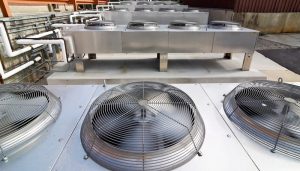
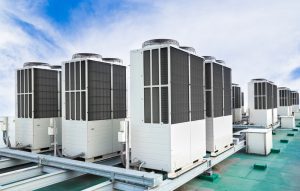
 There are several ways to provide central heat to a commercial building. The most common one is the rooftop HVAC unit. These packaged heat pump are useful for providing both heating and air conditioning around the year, and because they are located on the roof, they are easy for technicians to work on without creating disruption in the facility space.
 If you aren’t familiar with the specifics and the terminology of commercial and industrial HVAC systems (which is no problem; that’s why you have professionals like us!), then you may not understand what a “ton” is when it comes to heating and cooling.
 A winter in Toronto can be tremendously stressful on the heating systems for homes, let alone commercial facilities. Almost any commercial or industrial building requires extensive heating systems with proper ventilation to maintain an environment that protects equipment and keeps any employees, customers, or other people in the building from freezing.
 We’ve been working on commercial heating, cooling, and ventilation for more than three decades here in the Greater Toronto Area. We’ve seen it all when it comes to HVAC troubles for commercial facilities and buildings, from the routine and common to the very weird.
 During winter weather, concerns about the air quality inside commercial and industrial buildings is higher than at any other time of the year—especially in a place like Toronto, where the temperatures stay below freezing for most of the season. Fresh air circulation in a building simply doesn’t happen during cold weather when an indoor facility must be sealed off from the outside, so matter the type of facility.
 The official start of winter doesn’t arrive until later in the month—but the Toronto winter never obey specific dates. But by the last month of the year, the cold weather has already settled in, with below-freezing temperatures as the norm.
 If you are shopping for a residential HVAC system, then the term radiant heating has a specific meaning: heating systems that spread warmth through living spaces by raising the temperature of objects in those spaces so heat waves radiate from their surfaces. Boiler systems that use radiators and baseboard heaters or in-floor piping are common examples, and radiant systems can also be powered with electricity.
 You probably often hear about the importance of indoor air quality in buildings. It applies to commercial facilities, industrial facilities, and homes. You may be more focused on climate control inside your commercial facility, balancing heating and cooling to the ideal levels to provide comfort and protect process. But you cannot afford to ignore
  It’s never too early in the fall to prepare your commercial HVAC system for the rigors of another winter in the Greater Toronto Area. And we’re already past early fall! If you haven’t yet signed up for our