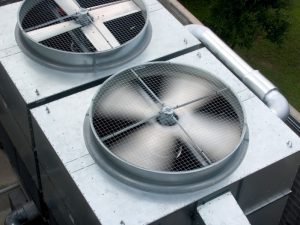
 Running a business of any kind involves making numerous decisions both large and small on a daily basis. Making a choice to upgrade or replace a large part of a facility’s air conditioning system definitely falls in the “large” category: most commercial facilities need cooling of some type in order for them to operate. Cooling can be necessary to protect equipment (such as in vital server room cooling), facilitate process, and provide comfort to employees, clients, tenants, etc. Failure of the air conditioning equipment or ineffective/inefficient performance will have a major negative impact on running your business.
Of course, taking the step to make major changes to older, out-of-date cooling equipment can be expensive, and you may be reluctant to make the change immediately. If you are on the fence about a new commercial air conditioning installation in Toronto, ON, the best step to take is to work with our commercial HVAC professionals. We have more than 30 years of experience assisting local businesses, both commercial and industrial, with proper heating and cooling. From server room cooling to industrial chillers, we can handle all cooling requirements and give you the information you need to make the right choices about your air conditioning equipment.
Continue Reading
Tags: Commercial Air Conditioning Installation, Commercial Air Conditioning Replacement, server room cooling, Toronto
Posted in Commercial Air Conditioning | Comments Off on Hesitant About Replacing Your Commercial AC System?
 The standard way of providing climate control inside most commercial facilities is with the air-source heat pump. You’re most likely familiar with these as the rooftop units found on commercial buildings. They work through refrigeration circulation to move heat either into or out of a facility space. The reason they’re called “air-source” heat pumps is because the use the air both indoors and outdoors for heat transfer.
 Summer is already here, and you’re fretting over the energy bills for your commercial facility. You need more power than ever for the cooling system that keeps your building comfortable and/or which provides the proper environment for equipment and process. Rooftop ACs, server room cooling systems, chillers—they put in an immense amount of work through the summer.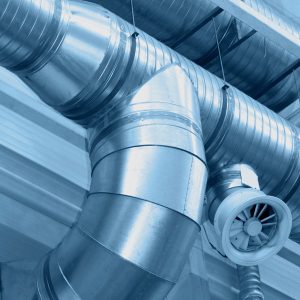
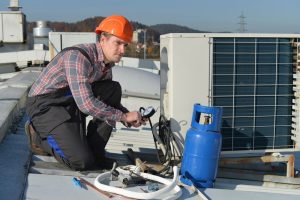 If you are looking for an
  While the weather outdoors is still cool at this point in spring, this is the time to make sure your industrial facility in the Greater Toronto Area has received its regular professional air conditioning maintenance.
 Maintaining the proper climate inside a commercial facility with cooling units isn’t only something to worry about during the hot weather of summer. The heat created in facilities from the equipment inside them often requires cooling systems. For example, server room cooling is essential for most businesses, even small ones, and it’s necessary around the year.
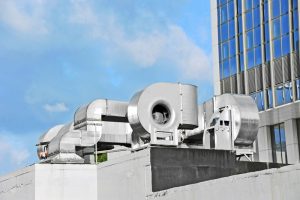 The summer weather from June to September in Toronto can sometimes rise to 35°C, and you don’t want to be a business of any kind stuck without an effective air conditioning system at those times. But proper cooling is important for many facilities around the year: it’s not only an issue of comfort for employees, clients, tenants, etc. but for process and to protect equipment. When you work with our commercial and industrial HVAC professionals, you’ll receive the right type of cooling for your building or facility. We understand the importance of customizing HVAC systems to meet all the specific needs of any of our clients.
 Does your commercial facility rely on a boiler in any way? Boilers remain popular for many commercial uses, such as providing comfort to a retail environment or to help with process. One reason for this popularity is the high energy efficiency of these systems: using heated water to send waves of heat into a space is more effective at delivering warmth rapidly than blowing around heated air from a furnace or rooftop unit. Boilers also don’t send dust and other particles around a space, and this is often essential for proper building operation—and it’s good for air quality in general as well.
 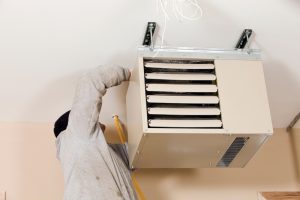 A standard commercial business space usually requires only sufficient heating for comfort for its employees, clientele, etc. during the winter months and sufficient warmth to protect equipment and allow for process. Standard ducted systems are the most common way to heat these spaces. Industrial facilities, however, are another story, and they often need a variety of heating systems to provide the right indoor climate control.